Dining rooms, back of house, washrooms, and kitchen exhaust across Toronto and the GTA
Restaurant Cleaning Services Toronto
Restaurant cleaning services Toronto operators book when a general office cleaner is not built for a kitchen floor, a busy dining room, and a DineSafe inspection all at once. Profound Cleaning handles the nightly and periodic cleaning that keeps the front of house presentable and the back of house inspection ready, plus NFPA 96 kitchen exhaust hood and duct cleaning that keeps your fire code and insurance in order, on a schedule that works around service.
- WSIB certified
- $5M liability insured
- NFPA 96 hood cleaning
- Certificate every clean
Why restaurants are different
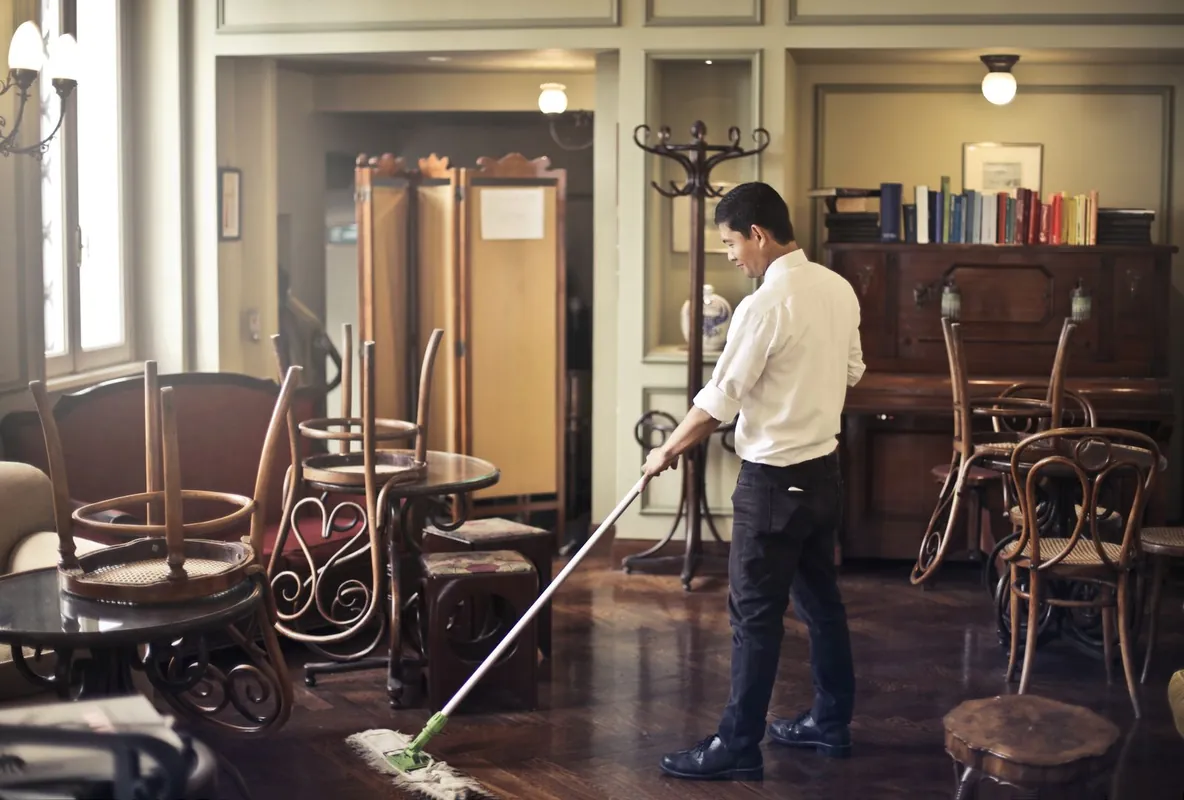
A restaurant is graded in public, and the floor decides how it looks
An office gets a complaint email when cleaning slips. A restaurant gets a yellow DineSafe placard in the window and a review that mentions the washroom. The stakes are visible to every customer walking past, which is why restaurant cleaning is judged harder than almost any other commercial space.
It is also physically a tougher job. Grease migrates from the line onto floors, walls, and equipment. Food and drink hit the floor all night. Washrooms take heavy public traffic during a rush. Quarry tile and non-slip flooring hold grime in their texture and turn dangerous when a degreaser is skipped. None of that responds to the vacuum-and-wipe routine that keeps an office tidy.
We scope restaurant work around the two things that actually get an operator in trouble: a dining room and washrooms that read as clean to a paying customer, and a back of house that holds up when a public health inspector walks in unannounced. Everything on the scope sheet serves one of those two ends.
The floor is the tell. If the dining room floor and the washroom are handled, customers assume the kitchen is too. If they are not, no amount of good food fixes the impression.
Scope
What a restaurant clean covers
Every task and its frequency goes into a written scope before the first visit, split across front of house, back of house, and washrooms so nothing falls through the gap between your staff and ours.
- Dining room floorsSwept and mopped edge to edge with the right product for quarry tile, vinyl, or hardwood, not just the open middle.
- Tables, booths, and railsTable bases, booth seams, chair legs, and handrails wiped, the spots that build up sticky residue.
- Bar and service areasBar front, speed rails area, floors, and drink-station surfaces cleaned and degreased.
- Entrance and windowsEntrance glass, mats, and sills, plus interior glass so the storefront reads clean from the sidewalk.
- Back-of-house floorsKitchen and prep floors degreased, drains flushed, corners and equipment bases reached, not just the walkway.
- Food-contact and prep surfacesPrep tables, stainless, and shelving sanitized to a food-safe standard on the surfaces we are scoped to clean.
- Dish and warewashing areaDish pit floor, splash zones, and surrounding walls kept clear of grease and food debris.
- WashroomsFixtures disinfected, mirrors and counters cleaned, consumables restocked, floors mopped with disinfectant, checked more than once on heavy nights.
- Waste and recyclingEmptied and routed to your bins or the building’s collection point, with organics separated to standard.
- Kitchen exhaust systemNFPA 96 hood, filter, plenum, duct, and fan cleaning to fire code, with a dated certificate after every service.
- Periodic deep workWall washing, high dusting, and floor scrubbing on a scheduled cycle.
Kitchen exhaust cleaning
NFPA 96 kitchen exhaust hood and duct cleaning
The grease that builds up inside a kitchen exhaust system is the single biggest fire risk in a commercial kitchen, and it is the one thing your insurer and the fire inspector look for a record of. We clean the whole system to the NFPA 96 standard and leave a dated certificate every time, so you are covered on paper as well as in practice.
The whole system, bare metal to fan
Grease does not stay at the hood. We clean the full exhaust path: the hood and canopy, the baffle filters, the plenum behind them, the horizontal and vertical ductwork, the exhaust fan and housing on the roof, and the rooftop grease containment. Access panels go in where the ductwork does not already have them, so no stretch of duct gets skipped.
A certificate your insurer accepts
Every clean ends with a dated NFPA 96 certificate and the inspection sticker on your hood, listing the scope, the areas cleaned, and any spots left inaccessible with the reason why. That is the document your insurance provider and the fire inspector ask for, and the record that keeps a routine visit from turning into a coverage problem.
How often NFPA 96 requires cleaning
- MonthlySolid-fuel cooking, wood or charcoal
- QuarterlyHigh-volume, 24-hour, charbroiling or wok lines
- Semi-annuallyModerate-volume standard kitchens
- AnnuallyLow-volume, seasonal or occasional cooking
We set the frequency to your cooking volume, not a sales target, and put it in the same written scope as the rest of the cleaning. For recurring multi-area programs, see janitorial services, and for a full floor-refinishing cycle, commercial floor cleaning.
DineSafe readiness
Cleaning that holds up when the inspector arrives
Toronto Public Health runs DineSafe, and inspections are unannounced. A green pass in the window is worth protecting, and cleaning is one of the few inspection factors fully inside your control.
Inspectors look closely at the things cleaning directly affects: floors and drains free of grease buildup, walls and surfaces around food prep, washroom condition, waste handling, and the general sanitation of contact surfaces. A consistent cleaning program does not replace your own food-safety practices, but it removes the easy findings that turn a routine visit into a conditional pass.
We work to a written scope and leave a completion log after every visit, so when you need to show that cleaning is happening on a schedule, you have a record instead of a verbal assurance.
Scheduling around service
We clean when you are closed, not when you are plating
The single biggest complaint operators have about cleaners is timing. A crew that shows up mid-service, or leaves a wet floor before doors open, costs you more than it saves.
Restaurant cleaning runs on your clock. For most sites that means after last service through to close, or an early pass before open, so floors are dry and the room is reset before the first cover. Late-night venues get a pre-open slot instead. We build the schedule off your actual hours and busiest nights, not a generic template.
Where a venue needs eyes on the dining room and washrooms during service, a day porter covers midday resets, spill response, and washroom checks between the deeper nightly cleans, rather than forcing everything into one after-hours window.
Who we clean for
Restaurant types we cover
Different formats need different scopes and frequencies. These are the ones we work with most across Toronto and the GTA.
Full-service and fine dining
Dining room presentation, upholstered seating, hardwood or tile floor care, and washrooms held to a standard customers notice.
Fast casual and QSR
High-traffic dining areas, self-serve stations, and floors that take a beating through the day, cleaned on a tight nightly cycle.
Cafes and bakeries
Front-of-house glass and counters, seating areas, washrooms, and back-of-house floors kept clear of flour and sugar residue.
Bars and pubs
Sticky floors, bar-front degreasing, late-night washroom traffic, and a pre-open reset for venues that close in the small hours.
Food courts and multi-unit
Shared seating, common floors, and waste handling across several vendors, with clear boundaries on who cleans what.
Ghost and commissary kitchens
Back-of-house-only sites where floors, drains, prep surfaces, and dish areas carry the whole cleaning load.
Getting started
How a restaurant account starts
From first call to first clean is usually a few days. We keep onboarding short because a dirty floor tonight is not a next-month problem.
Walkthrough
We walk the site after or before service, note floor types, the grease load, washroom count, waste setup, and your busiest nights.
Written scope and price
Every task and frequency in writing with the price against it, plus what is specifically excluded, inside 24 hours of the walkthrough.
Schedule around service
We lock the cleaning window to your hours, confirm access and alarm handling, and assign the crew that will keep coming back.
First clean and log
Service starts on the agreed schedule with a completion log after each visit, and we adjust the scope after the first two weeks if the site needs it.
What moves the price on a restaurant
Restaurant cleaning is priced on the same fundamentals as other commercial work, roughly $0.15 to $0.50 per square foot monthly or $35 to $65 per hour per cleaner, but restaurants usually sit toward the higher end because the work is nightly, the grease load is heavier, and floors and washrooms demand more attention than an office. The real drivers are cleaning frequency, kitchen size and grease load, number of washrooms and covers, floor type, and how much periodic deep work is built in. For the full breakdown, see our Toronto commercial cleaning cost guide.
Questions
Restaurant cleaning questions
What Toronto operators ask us most often before they book.
How much does restaurant cleaning cost in Toronto?
Most restaurants land toward the higher end of commercial rates, roughly $0.30 to $0.50 per square foot monthly, or $35 to $65 per hour per cleaner, because the work is usually nightly and the grease and washroom load is heavier than an office. Smaller sites are often quoted per visit. We price after a walkthrough rather than over the phone, because grease load and floor type swing the number more than square footage alone.
Do you clean kitchen exhaust hoods and ducts?
Yes. We clean the full exhaust system to the NFPA 96 fire-code standard: the hood and canopy, baffle filters, plenum, ductwork, the exhaust fan on the roof, and rooftop grease containment. Every clean ends with a dated certificate and the inspection sticker on your hood, which is what your insurer and the fire inspector want to see. We set the frequency to your cooking volume, from monthly for solid-fuel lines down to annually for low-volume kitchens.
How often does a kitchen exhaust system need cleaning?
NFPA 96 sets frequency by cooking volume: monthly for solid-fuel cooking with wood or charcoal, quarterly for high-volume, 24-hour, charbroiling, or wok operations, semi-annually for moderate-volume standard kitchens, and annually for low-volume or seasonal cooking. We assess your line at the walkthrough and set a schedule that meets the code for your operation rather than selling you more visits than you need.
Can you clean without disrupting service?
Yes, that is the default. We schedule after last service or before open so floors are dry and the room is reset before your first cover. Late-night venues get a pre-open slot. Where a site needs daytime coverage as well, a day porter handles resets and washroom checks during service.
Will this help with a DineSafe inspection?
A consistent cleaning program removes many of the easy findings an inspector flags: grease on floors and drains, buildup around prep areas, washroom condition, and waste handling. It does not replace your own food-safety practices, but it keeps the cleaning-related factors in good shape and gives you a completion log showing the work is done on a schedule.
Do you handle greasy back-of-house floors and drains?
Yes. Back-of-house floors are degreased with the right product for quarry tile or non-slip surfaces, corners and equipment bases are reached, and drains are flushed as part of the scope. Grease left on a textured floor is both a slip hazard and an inspection finding, so it is treated as core work, not an extra.
Do I need a long-term contract?
No. We work without lock-in contracts. You get a written scope and a price, and the arrangement continues because the work holds up. If it does not, you are not tied in while you sort it out.
Can you cover more than one location?
Yes. Multi-unit operators and small groups run on a shared written scope with the same standard and completion logs at every site, so you are not managing a different cleaner and a different standard at each address.
Do you provide the consumables?
It varies and it goes in the scope. Some accounts include washroom paper, hand towel, and soap in the monthly price, others have the venue supply them while we restock. Neither is wrong, but leaving it unstated is a common source of billing surprises, so we settle it up front.
Book a walkthrough
Get a restaurant cleaning quote
Tell us the format, roughly how many covers you run, your floor types, and your busiest nights. We walk the site around service, map the grease load and the washroom traffic, and send a written scope with the price against it inside 24 hours.
Based at 3100 Steeles Ave W, Suite 206A, Concord, ON L4K 3R1. Serving Toronto, Vaughan, Mississauga, Brampton, Markham, Scarborough, Etobicoke, North York, and the wider GTA.
+1 (647) 567-9992