The new floor looks cloudy. Dust remains inside the drawers. Window tracks hold grit, and a label has left adhesive on the glass. Each problem needs a different approach; putting a stronger machine on every surface can create damage instead of a cleaner finish.
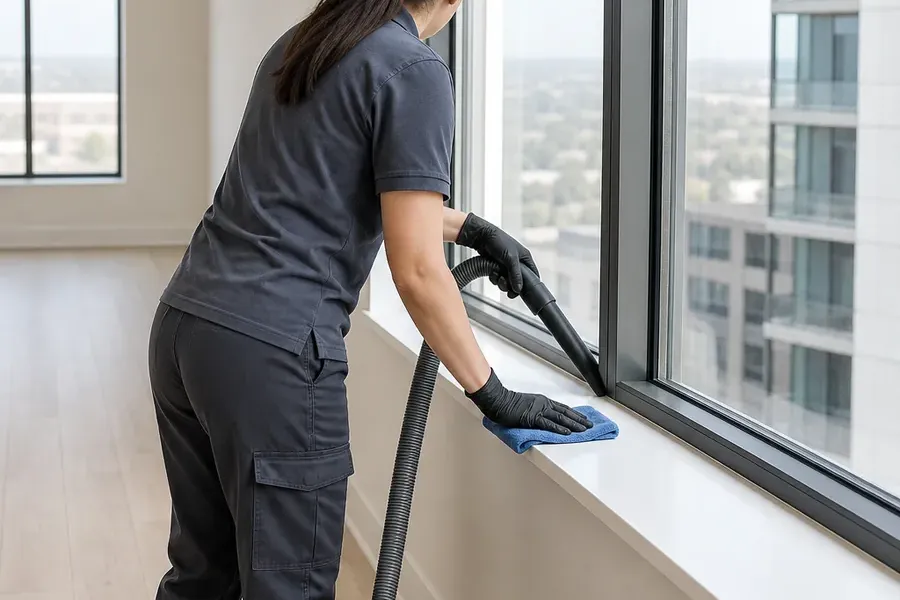
Post-construction cleaning equipment includes suitable HEPA-filtered vacuums, microfiber cloths, detail brushes, glass tools and floor-cleaning equipment. Air scrubbers and specialist machines may be added when the site assessment calls for them.
For Toronto homeowners, contractors and property managers, the useful question is: which tool will remove the remaining material without harming the surface underneath? This guide explains the main tools, their limits and what to confirm before the crew arrives.
Post-construction cleaning equipment at a glance
This is a task guide, rather than a shopping list for every project. A renovated condo kitchen and an open commercial fit-out need different equipment plans.
| Tool or equipment | Main job | What to check |
|---|---|---|
| Suitable HEPA-filtered vacuum | Collect fine dust from accessible surfaces | Dust suitability, filtration system and attachments |
| Wet/dry vacuum | Recover approved liquids or debris | Whether its configuration suits the actual material |
| HEPA air scrubber | Filter airborne particles | Placement, filtration and the reason it is needed |
| Microfiber cloths and flat mops | Detail surfaces and complete compatible floor cleaning | Clean pads, trapped grit and moisture control |
| Soft detail brushes and crevice tools | Reach tracks, corners and fittings | Bristle softness and how loosened dust is collected |
| Window washer and squeegee | Wash glass and remove cleaning solution | Glass coatings, grit and access |
| Plastic scraper or approved removal tool | Lift selected labels or residue | Surface compatibility and manufacturer instructions |
| Floor scrubber-dryer | Scrub suitable hard flooring and recover dirty water | Floor type, brush or pad, solution and curing requirements |
| Single-disc floor machine | Carry out an assessed floor treatment | Whether the treatment is actually required |
| Extension tools and access equipment | Reach agreed elevated surfaces | Safe reach and site access arrangements |
| Work light | Reveal remaining marks during inspection | Viewing angle and inspection under normal lighting |
1. HEPA-filtered vacuum: collecting fine construction dust
A suitable HEPA-filtered vacuum collects dust from floors, ledges, skirting boards, cabinet interiors and other accessible areas. Crevice attachments reach narrow gaps; a suitable soft brush attachment helps with delicate detailing.
The vacuum must suit the dust involved. Ask about the complete machine, its seals, filters and collection system rather than relying on a filter label alone. Follow the equipment manufacturer’s instructions for bags, maintenance and emptying.
Fine construction dust also needs a hazard assessment. For silica cleanup, the Canadian Centre for Occupational Health and Safety advises against dry sweeping and compressed air, and describes collection with an approved HEPA vacuum or appropriate dust-suppression methods.
Tell the cleaning provider about known hazardous materials before booking. Buying a vacuum does not establish that an unassessed site is suitable for ordinary finishing cleanup.
2. Wet/dry vacuum: recovering liquids and suitable debris
A wet/dry vacuum can collect approved liquids and debris when equipped for that task. Its practical role may include recovering cleaning water from a suitable floor or handling material permitted by the machine’s instructions.
“Wet/dry” describes a capability; it does not confirm suitability for fine construction dust. Check the model, filter arrangement and collection requirements before use. Changing from dry collection to liquid recovery may require a different setup.
The distinction matters when comparing quotes. A provider bringing a general-purpose vacuum has not necessarily described how it will control the fine dust inside your finished space.
3. HEPA air scrubber: filtering particles in the air
An air scrubber draws room air through filters to capture airborne particles. Manufacturer Legend Brands describes this function in its air-scrubber manual.
Its role differs from a vacuum: the air scrubber treats air passing through the unit, while the vacuum collects material from a surface. Running an air scrubber does not remove dust sitting inside a drawer or beneath a window ledge.
Ask why the unit is proposed, where it will operate and how it fits the wider dust-control plan. Its presence alone does not establish safe air quality or readiness for occupancy.
4. Microfiber cloths and flat mops: finishing surfaces
Microfiber cloths help detail cabinetry, trim, fixtures and other compatible surfaces. Flat mops provide controlled coverage on suitable floors after loose grit has been removed.
The condition of the cloth matters. A dirty cloth can carry grit onto a newly finished surface. Crews should change cloth faces or pads as they become soiled and keep washroom tools separate from kitchen and general-area tools.
Moisture also needs control. A cloth suitable for a tiled wall may be too wet for an unfinished cabinet edge or newly installed wood flooring. Follow the finish supplier’s care instructions.
5. Detail brushes and crevice tools: reaching the missed areas
Small brushes and narrow vacuum attachments reach window tracks, drawer corners, hinges and edges around fittings. These tools address places that a broad floor head or cloth cannot reach effectively.
Pair the tool with a collection method. Brushing dust out of a track and leaving it on the sill simply moves the work elsewhere. Check that bristles are suitable for the finish and avoid forcing tools against seals or hardware.
Cleaning an accessible vent cover also differs from cleaning inside ductwork. Identify the required task in the scope before assuming the same tools cover both.
6. Window washers and squeegees: cleaning glass
A window washer applies compatible cleaning solution; a squeegee removes it from the pane. Separate detailing may be needed for frames, tracks and edges.
Construction glass needs an inspection before cleaning because grit, coatings, labels and residue can change the method. A squeegee cleans a pane; it does not establish that a stubborn paint spot can be scraped away safely.
Ask for exterior or difficult-to-reach glazing to be assessed through a separate commercial window cleaning scope where required.
7. Scrapers and residue-removal tools: use only after checking the surface
A suitable plastic scraper may help lift selected labels or softened adhesive. Plastic tools can still mark a surface or drag trapped grit across it, so their material alone does not make them safe.
Metal blades deserve particular caution. Cardinal’s glass-cleaning bulletin recommends that metal blades never be used to remove material from its glass surfaces and warns of permanent damage.
Follow the actual glass or finish manufacturer’s instructions. A test area does not override a prohibited method. If compatibility is unclear, stop and obtain guidance rather than increasing pressure or using a harsher product.
8. Floor scrubber-dryer: cleaning suitable hard floors
A scrubber-dryer applies cleaning solution, agitates the surface with a brush or pad and recovers dirty water. It can be useful across suitable open hard-floor areas; Kärcher explains the equipment’s scrubbing and recovery functions.
Before using one, confirm the flooring material, approved cleaning method, brush or pad and any curing requirements. Remove loose debris and grit first. Edges, corners and tight spaces still need separate attention.
Do not assume every new floor can be wet-cleaned or machine-scrubbed. The National Wood Flooring Association advises against wet and steam mops on wood flooring and recommends products intended for the floor’s finish.
9. Single-disc floor machine: an assessed treatment
A single-disc machine uses a rotating pad or brush for a specified floor treatment. The result depends on the attachment, product, surface and operator’s method.
It should have a defined purpose in the quote. Removing construction residue, stripping an existing finish and polishing a surface are different tasks. A newly installed floor does not automatically need stripping or polishing.
If the assessment identifies work beyond the final clean, request a separate commercial floor cleaning assessment with the proposed treatment explained.
10. Extension tools, work lights and supporting equipment
Extension poles help reach agreed elevated surfaces. Higher or awkward areas may require suitable access equipment and a separate plan. Tell the provider about stairwells, double-height spaces and restricted areas before the visit.
A portable work light can help reveal dust or streaks from different angles. Use it alongside normal room lighting during the walkthrough. A mark that remains may be damage or unfinished trade work, so record it before attempting more aggressive cleaning.
Waste containers, protective equipment and warning signs also support the job. Confirm the disposal route and site requirements. These items help crews carry out the agreed work; they do not make hazardous-material removal part of a routine clean.
How the equipment fits the cleaning sequence
Using tools in a sensible order reduces the chance of putting dust back onto finished areas:
- Assess the site. Identify materials, finishes, remaining trades and known hazards.
- Clear agreed loose debris. Use the site’s disposal arrangements and keep access routes available.
- Collect dust from accessible upper areas downward. Include the ledges, tracks and interiors named in the scope.
- Detail glass, fixtures and residue. Use methods approved for each surface.
- Complete floor cleaning. Select the method for the actual flooring and its condition.
- Inspect and record. Review completed areas, remaining marks and unfinished work.
Final detailing should follow dust-producing trade work. If contractors return afterward, agree on whether a separate touch-up visit is needed.
Equipment planning for Toronto condos and commercial sites
A machine must reach the work area before it can help. For a Toronto condo renovation, confirm elevator dimensions, the equipment route, loading arrangements and permitted work hours with building management.
For commercial projects, identify water and power availability, restricted rooms and where dirty-water disposal is permitted. Tell the provider about occupied areas that must remain accessible.
Include these conditions in the quote request. They help the estimator decide whether compact equipment, different access arrangements or additional setup time is required.
Copyable equipment and scope checklist
Use this checklist when reviewing a post-construction cleaning quote:
- The provider knows which construction work has taken place and any known material hazards.
- The dust-collection equipment is suitable for the assessed task.
- Cabinet interiors, window tracks and elevated ledges are named where required.
- New glass, floor and coating care instructions have been shared.
- Residue-removal methods are agreed before scraping or chemical treatment.
- Any proposed air scrubber or floor machine has a stated purpose.
- Elevator access, loading, power and water arrangements are confirmed.
- Waste handling and offsite hauling responsibilities are clear.
- Specialist floor treatment, exterior glass and internal duct cleaning are identified separately.
- The walkthrough and completion record cover the agreed tasks.
Frequently asked questions
What equipment is needed for post-construction cleaning?
The equipment depends on the dust, surfaces and scope. It commonly includes suitable dust-collection equipment, microfiber cloths, detail tools, glass-cleaning tools and a compatible floor-cleaning system. Larger machines should follow the assessment.
Can I use a regular household vacuum for construction dust?
Do not assume it is suitable. Check the manufacturer’s permitted materials and filtration requirements. Fine construction dust and known hazardous dust require an assessed collection method.
Does every project need an air scrubber?
No. Its use should follow the site’s dust-control assessment. Ask what it will achieve and remember that surfaces still need cleaning.
Should construction dust be mopped immediately?
Choose the method after identifying the dust and floor. For a suitable finished surface, collecting loose material before final wiping or mopping can avoid spreading residue. Hazardous dust needs its own assessed procedure.
Will a floor machine remove every construction mark?
No. Adhesive, grout haze, scratches and coating defects need different assessments. A remaining mark may require a specialist treatment or repair rather than more scrubbing.
Should I buy equipment before booking a cleaning company?
Ask what the provider supplies before buying or renting anything. Explain the site conditions and agree on the result, equipment responsibilities and any separately priced work in writing.
Plan the clean around your finished surfaces
The equipment plan should explain how the crew will handle your dust, glass, cabinetry and flooring. It should also identify work that needs another specialist or a later visit.
Profound Cleaning’s post-construction cleaning service in Toronto covers assessed rough, final and touch-up scopes, with a written scope before work and a completion log after each booked phase.
Send photographs, the surface details and your handover date through the quote request page, or call +1 (647) 567-9992 to discuss your project.
Need this handled at your building?
Written scope before work, completion log after every visit, same crew every time. WSIB certified and $5M insured across Toronto and the GTA.
Keep Reading

How to Remove Drywall Dust After a Renovation
Learn how to remove drywall dust after a renovation, clean walls and floors without spreading residue, and check the areas that are…

Professional House Cleaning Checklist: Room by Room
A professional house cleaning checklist, room by room: kitchens, bathrooms, bedrooms and living areas, with routine tasks, extras and final checks.
Post-Construction Cleaning: The Three Phases and What Each One Covers
Post-construction cleaning goes wrong in a predictable way. The trades finish, someone books a single clean for the day before handover, and…