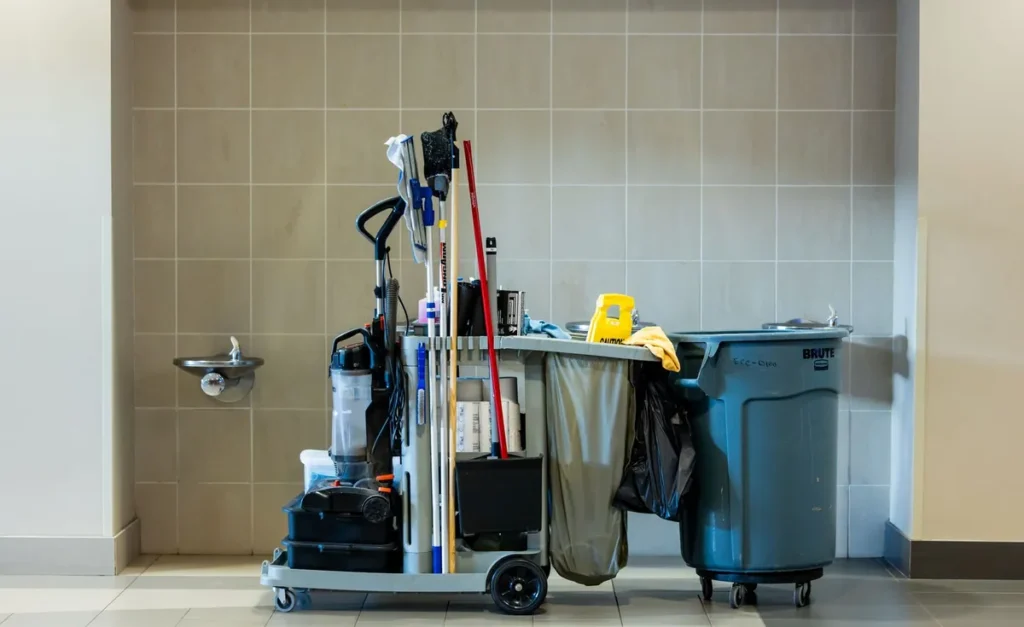
A working office cleaning checklist splits the job into four frequencies: daily tasks that keep the space usable, weekly tasks that stop buildup, monthly tasks that protect the finishes, and quarterly tasks that deal with everything nobody looks at. Most Toronto offices get into trouble because they only ever buy the daily list, then wonder why the carpets look tired and the vents are grey after eighteen months. The checklist below is the one we scope against when we walk a building.
Why a written checklist matters more than the hourly rate
Two cleaning quotes can look identical on price and be completely different jobs. One includes washroom restocking, interior glass, and a monthly floor pass. The other is a vacuum, a bin empty, and a wipe of the reception desk. Without a written scope you cannot tell which one you bought until something starts looking neglected.
This is the single most useful thing a facility manager can do before collecting quotes: write down what actually needs cleaning, how often, and who is responsible. Then make every contractor price the same list. You will find the spread between quotes narrows dramatically, and the cheap outlier usually turns out to be missing half the scope.
Daily office cleaning checklist
Daily tasks are the ones that are visible within hours if they get skipped. In most Toronto offices these are done after business hours so the space is ready before staff arrive.
Reception and common areas
- Empty all waste and recycling, replace liners
- Wipe reception desk, counters, and visible surfaces
- Spot-clean entrance glass and door handles
- Vacuum entrance mats and high-traffic carpet
- Tidy seating, straighten furniture, remove clutter left overnight
- Wipe elevator buttons, light switches, and door push plates
Workstations and offices
- Empty desk-side bins and recycling
- Dust clear desk surfaces (staff clear their own paperwork)
- Vacuum or dust mop all floor areas
- Wipe shared touchpoints: printer panels, phone handsets, meeting room tables
- Spot-clean fingerprints from partition glass and interior doors
Kitchen and break room
- Wipe counters, sinks, taps, and backsplash
- Clean exterior of fridge, microwave, dishwasher, and coffee machine
- Empty organics and waste, sanitize bin lids
- Wipe tables and chair backs
- Restock paper towel, dish soap, and hand soap
- Damp mop the floor
Washrooms
- Clean and disinfect toilets, urinals, and seats
- Clean sinks, taps, counters, and mirrors
- Disinfect all touchpoints: handles, locks, dispensers, flush levers
- Restock toilet paper, hand towel, and soap
- Empty waste and sanitary bins
- Damp mop with disinfectant, check drains for odour
Washrooms are where a cleaning contract is judged. If your building has heavy daytime traffic, a nightly clean alone is often not enough, which is why some properties add a day porter for midday checks and restocking.
Weekly office cleaning checklist
- Detail-dust low surfaces: baseboards, sills, ledges, and radiator covers
- Dust monitors, keyboards, and desk electronics where permitted
- Clean interior glass, partitions, and meeting room doors fully
- Damp wipe all chair bases, arms, and table legs
- Vacuum upholstered seating in reception and meeting rooms
- Machine scrub or damp mop all hard floors edge to edge
- Disinfect telephone handsets and shared headsets
- Wipe inside the microwave and clean the fridge exterior seals
Monthly office cleaning checklist
- High dusting: light fixtures, vents, sprinkler heads, and door frames
- Dust and wipe tops of cabinets, lockers, and shelving units
- Vacuum vents and diffuser grilles
- Spot-clean walls, corners, and light switch surrounds
- Clean interior of the fridge (with notice to staff)
- Buff or burnish hard floors to restore appearance
- Detail-clean under desks and behind moveable furniture
- Descale washroom taps, shower heads, and kettle where applicable
Quarterly and annual tasks
These are the tasks that protect the asset rather than the appearance. They are also the ones most often left out of a quote, then billed later as extras.
- Carpet hot water extraction in traffic lanes and open plan areas
- Strip and wax, or scrub and recoat, on VCT and vinyl floors
- Interior and exterior window cleaning where reachable
- Upholstery cleaning on office chairs and soft seating
- Deep clean of kitchen appliances, including behind and underneath
- Full washroom deep clean including grout and partition panels
- Wall washing in corridors and high-contact areas
Floor work in particular has a cycle. Carpets in a busy Toronto office generally need extraction two to four times a year, and VCT needs a full strip every twelve to eighteen months in high traffic. Skipping the cycle does not save money, it just moves the cost to a replacement.
How often should each area be cleaned?
| Area | Typical frequency | Increase when |
| Washrooms | Daily, plus midday checks | Public access or 50+ staff |
| Kitchen and break room | Daily | Staff eat lunch on site |
| Workstations | Daily vacuum, weekly detail | Hot-desking or shift work |
| Reception and entrance | Daily | Winter salt and slush season |
| Meeting rooms | Daily reset | Client-facing or booked back to back |
| Interior glass | Weekly | Open plan with glass partitions |
| High dusting and vents | Monthly to quarterly | Allergy complaints or renovation nearby |
| Carpet extraction | 2 to 4 times a year | Ground floor or heavy foot traffic |
| Hard floor strip and wax | Every 12 to 18 months | Retail-level traffic |
Winter changes the checklist in Toronto
Between roughly November and April, salt and slush do more damage to Toronto office floors than the rest of the year combined. Salt residue is abrasive and it will dull a finish quickly if it sits. Three adjustments are worth making seasonally: extend the entrance matting so it catches at least six to eight steps of walk-off, increase entrance and lobby mopping frequency, and add a neutralizing floor cleaner to the routine rather than plain water, which spreads salt around instead of lifting it.
What your cleaning contractor should give you in writing
A checklist is only useful if someone confirms it was actually done. When you scope a contract, ask for these five things:
- A written scope listing every task and its frequency, agreed before the first clean
- A completion log after each visit so you have a record, not a verbal summary
- WSIB clearance and a certificate of insurance provided without you having to chase them
- A named crew assigned to your site, with notice given when it changes
- A defined exclusion list, so both sides know what is not included
That last point prevents most disputes. If dishwasher emptying, plant watering, or personal desk items are not in scope, say so in the document rather than leaving it to be discovered.
In-house or contracted?
Small offices under roughly 2,000 square feet with a handful of staff can often run daily tidying in-house and bring in a contractor weekly plus quarterly deep work. Once you pass about 15 to 20 staff, or you have public-facing washrooms, contracted service usually costs less than the staff time it replaces, and it comes with the insurance and coverage that in-house cleaning does not.
The other factor is coverage. An in-house cleaner who calls in sick leaves the office uncleaned. A contracted crew should have backup written into the scope.
Frequently asked questions
What should be on a daily office cleaning checklist?
At minimum: waste and recycling emptied, washrooms cleaned, disinfected and restocked, kitchen surfaces wiped and floor mopped, all floors vacuumed or dust mopped, and shared touchpoints disinfected. Everything else can move to weekly or monthly depending on your traffic.
How often should office carpets be professionally cleaned?
Two to four times a year for most Toronto offices. Ground floor entrances and open plan traffic lanes need the higher end, private offices and low-traffic rooms the lower end. Regular vacuuming extends the interval, but it does not replace extraction because it does not remove the fine soil ground into the pile.
Should cleaning happen during or after business hours?
After hours for the main clean, so the space is ready before staff arrive and nobody works around a vacuum. Buildings with heavy daytime traffic often add daytime coverage on top for washroom checks, spill response, and lobby resets rather than moving the whole clean into working hours.
Who supplies the consumables?
It varies, and it should be stated in the scope. Some contracts include toilet paper, hand towel, and soap in the monthly price. Others have the client buy consumables and the cleaner simply restocks them. Neither is wrong, but an unstated assumption here is a common source of monthly billing surprises.
How do I know the checklist was actually completed?
Ask for a completion log after every visit. It should record the date, the crew, and the tasks completed, including any periodic work done that night. Without a log you are relying on inspection, which only catches problems after someone has already noticed them.
Use this checklist to get comparable quotes
Profound Cleaning runs 30+ commercial buildings monthly from our Concord office. We are WSIB certified and carry $5M liability insurance, we agree a written scope before the first clean, and we send a completion log after every visit. There is no lock-in contract.
If you want this checklist priced against your actual floor plan, book a free site assessment. We walk the space, mark what needs daily attention versus periodic work, and put the scope and the price in writing before anything starts.
Related reading and services: office cleaning services in Toronto, recurring janitorial programs, medical and clinic cleaning, what commercial cleaning costs in Toronto, or request a free site assessment.
Profound Cleaning Inc., 3100 Steeles Ave W, Suite 206A, Concord, ON L4K 3R1. Call +1 (647) 567-9992. Serving Toronto and the GTA.
Two things sit alongside this checklist. Winter salt and commercial floor damage explains why the entrance needs its own frequency from November to April, and janitorial services cost in Toronto covers what a scope like this actually prices at.
Need this handled at your building?
Written scope before work, completion log after every visit, same crew every time. WSIB certified and $5M insured across Toronto and the GTA.
Keep Reading

Post-Construction Cleaning Cost in Toronto: What Changes the Quote?
Post-construction cleaning cost Toronto guide: $0.10 to $0.50 per sq. ft. by phase, a $350 minimum, and what a written quote should…

How to Hire a Reliable Cleaning Company in Toronto
Before you hire a cleaning company in Toronto, check insurance and WSIB, compare written quotes for the same scope and score each…

Toronto Cleaning Companies: How to Compare Providers Fairly
Compare Toronto cleaning companies using the same scope, visit schedule and annual cost. Includes a worked quote example and a reusable comparison…